

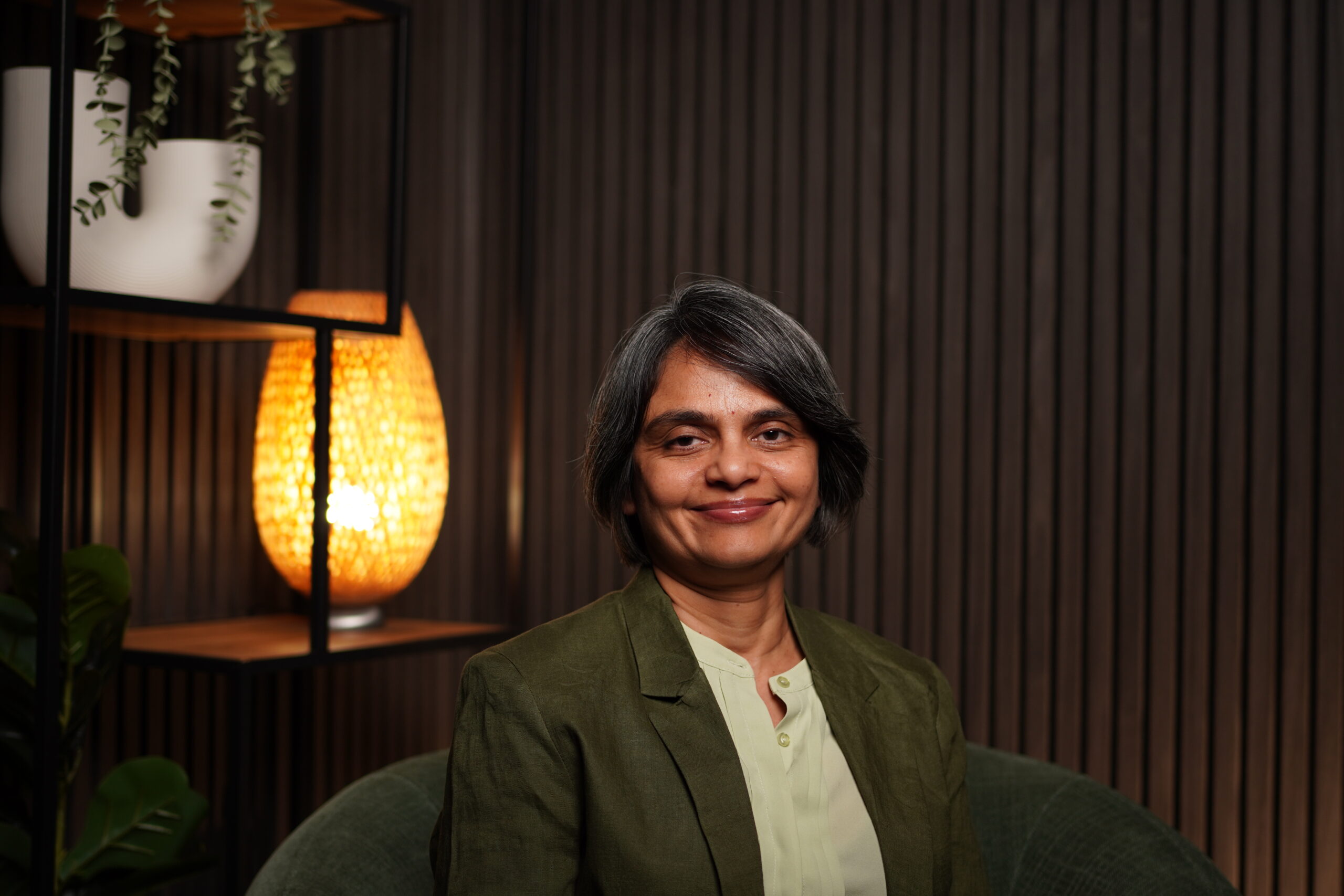
Antiksha Joshi.
Quality systems and compliance for pharmaceutical and life sciences organisations. 28 years, three continents, and a strong preference for systems people can actually use.

Why I work this way.
I kept walking into companies with complex quality systems built from off-the-shelf templates, or lifted wholesale from larger pharmaceutical companies. They'd been built to tick compliance boxes rather than to run the business, and they created more non-compliance than they demonstrated compliance.
What frustrated me most was that documents existed everywhere, and none of them explained the why behind the regulation or the control. Nobody had helped anyone understand how the work was actually meant to be done. People weren't failing to comply because they didn't care. They were failing because the system made complying harder than not.
At the same time, regulatory guidance was moving towards risk-based and data-based decision making. You can't do either of those unless you genuinely understand how an organisation works. Both of those things pointed at the same conclusion.
So I stopped starting with documents, and started with the operation.


Explaining why, not just what.
Years ago I was part of a team investigating a major batch failure.
Operations would suggest a fix, and I'd ask questions until I understood how the work actually got done on the floor, then explain why their suggestion wouldn't hold and what a regulator would ask if we went ahead with it.
At the end of those sessions one of them said that nobody had ever explained why they needed to do something before, and that now it made sense. I've worked that way ever since. On a facility assessment last year, every finding I raised and every question I asked came with the reasoning behind it: why this specific thing would concern an inspector. The staff on that site had been working the same way for twenty years and couldn't understand why it was suddenly a problem. A list of gaps wouldn't have changed that. Explaining what sat behind each one did.
Most quality systems don't fail on design. They fail because nobody explained the reasoning to the people who have to live with them.

Experience.
28 years in pharmaceutical and life sciences quality, across Australia, Europe and Asia.
I've worked in and around quality systems examined by the USFDA, the MHRA and the TGA. I've held quality leadership roles rather than only advised on them, which matters more than it sounds: owning a decision is a different discipline from recommending one.
I've worked with pharmaceutical manufacturers, CDMOs, early-clinical stage biotech companies and clinical research organisations, on quality systems, GxP compliance, data integrity, auditing and quality training. I've audited API manufacture, sterile fill-finish, contract testing laboratories, IMP storage and sterilisation facilities, in Australia, China and Europe.
I'm based in Western Australia and work with clients nationally and internationally.
Qualifications and recognition.
Master of Science, Microbiology
M.S. University, India
Diploma in Counselling
Australian Institute of Professional Counsellors
Director
ISPE Australasia Affiliate
Chair, Women in Pharma
ISPE Australasia Affiliate
Training facilitator
Life Sciences Australia
Professional engagements.
I facilitate training for Life Sciences Australia and The Biotech Academy in Rome on various topics related to quality management systems and compliance: quality management for early-stage drug development, quality management principles for life science startups and project managers, effective internal auditing, deviations management, writing SOPs in the age of AI, data governance and data integrity, being audit ready, quality risk management, and the foundations of digital transformation.
I also write and speak internationally on pharmaceutical quality systems for various knowledge sharing organisations and online publications, including Outsourced Pharma.
Published.
Quality Culture and the Impact on Certification
— book chapter, Springer Nature Singapore
READ CHAPTER
Create a Quality-System Plan Before Outsourcing
— Outsourced Pharma
READ ARTICLE
Panel discussions.
No Strategic Outsourcing Without an Internal Strategy
— Outsourced Pharma
WATCH DISCUSSION
Interviewing Consultants and “Free” Advice
— Outsourced Pharma
WATCH DISCUSSION
Podcast.
Misconceptions About the QA Role, and How to Do Quality Culture Assessments
— Life Science 360, episode 7
LISTEN TO PODCAST
Recent webinar.
Being audit ready: responding to FDA 483s and what the draft guidance means
— Scilife
WATCH WEBINAR
Recent events.

What clients say.
“Antiksha has been a trusted quality advisor to the Infensa Bioscience team for several years. Her depth of GMP knowledge, practical approach and sound judgement have been invaluable in helping us navigate the quality requirements associated with clinical development. She is responsive, pragmatic and always takes the time to understand the context before providing advice.”
Ming Chong
Head of CMC & Project Management, Infensa Bioscience
“The Quality Assurance services provided by UQM Consulting exceeded our expectations in every aspect. Antiksha demonstrated an unparalleled level of expertise and commitment to ensuring the highest standards in our processes, business and current quality framework.”
Garry Heaney
CEO, Southern RNA
“She brought not only a wealth of quality experience to the team but also a fresh perspective on how to build a quality system that works for IDT as a business.”
Priscilla Thiyageas
Quality Director, IDT
1. Customise.
2. Simplify.
3. Comply.
How I work.
Customise, simplify, comply, in that order.
Understand the operation before changing anything, take out what isn't doing work or isn't compliant, then implement and verify against the requirements. I work inside existing teams rather than around them. Clients work directly with me — there's no team to be handed to, and no junior consultant doing the actual assessment.
Get in touch.
Thirty minutes on your situation, and an honest view on whether I'm the right person for it. Nothing to prepare.