Training your people actually use afterwards
If your training records are complete and your practice still isn't consistent, more training won't fix it. That's usually a sign the training was built for the record rather than for the job.
I build training around your processes, for the specific roles that need it, and I come back afterwards to check whether it landed. That last part is the bit most training skips, and it's the reason most training doesn't change anything.

28 years in life sciences across three continents
Training facilitator for Life Sciences Australia
What a capable team gives you
People who follow procedures because they make sense.
Understanding beats instruction every time, and it survives the person who wrote the SOP leaving.
Fewer errors that trace back to misunderstanding.
Those are separable from errors of process design, and worth separating, because they have different fixes.
New starters working unsupervised sooner.
A cost most companies feel and almost none measure.
Managers who coach rather than correct.
Knowledge that compounds instead of resetting every time someone leaves.
Consistent practice across shifts and sites.
If two teams do the same task differently, one of them is wrong and probably nobody has noticed.
Knowledge that stays when people go.
Why training alone doesn't change behaviour
It's treated as an event rather than a habit. Delivered, recorded, filed, never revisited. The matrix says everyone is trained.
The content was built for the record. Generic GxP material that satisfies an auditor and doesn't describe anything the person in the room actually does.
Nobody explained the why. People are told what the procedure requires and not what the regulation is actually protecting against. Without that, the first unusual situation gets handled on instinct.
Sometimes the procedure being trained is the problem. If people can't follow it, more training on it won't help, and I'll tell you that rather than take the booking.
Nobody reinforces it once the session ends. Understanding fades. Nobody checks. Six months later the practice has drifted and the records still say everyone was trained.

You'll recognise some of these
The same errors keep happening after retraining
Records complete, practice inconsistent
Staff can quote the SOP and can't apply it
New starters learn from whoever happens to be nearby
Refreshers scheduled to satisfy the training matrix
Managers correcting the same thing over and over
Training and coaching aren't the same thing
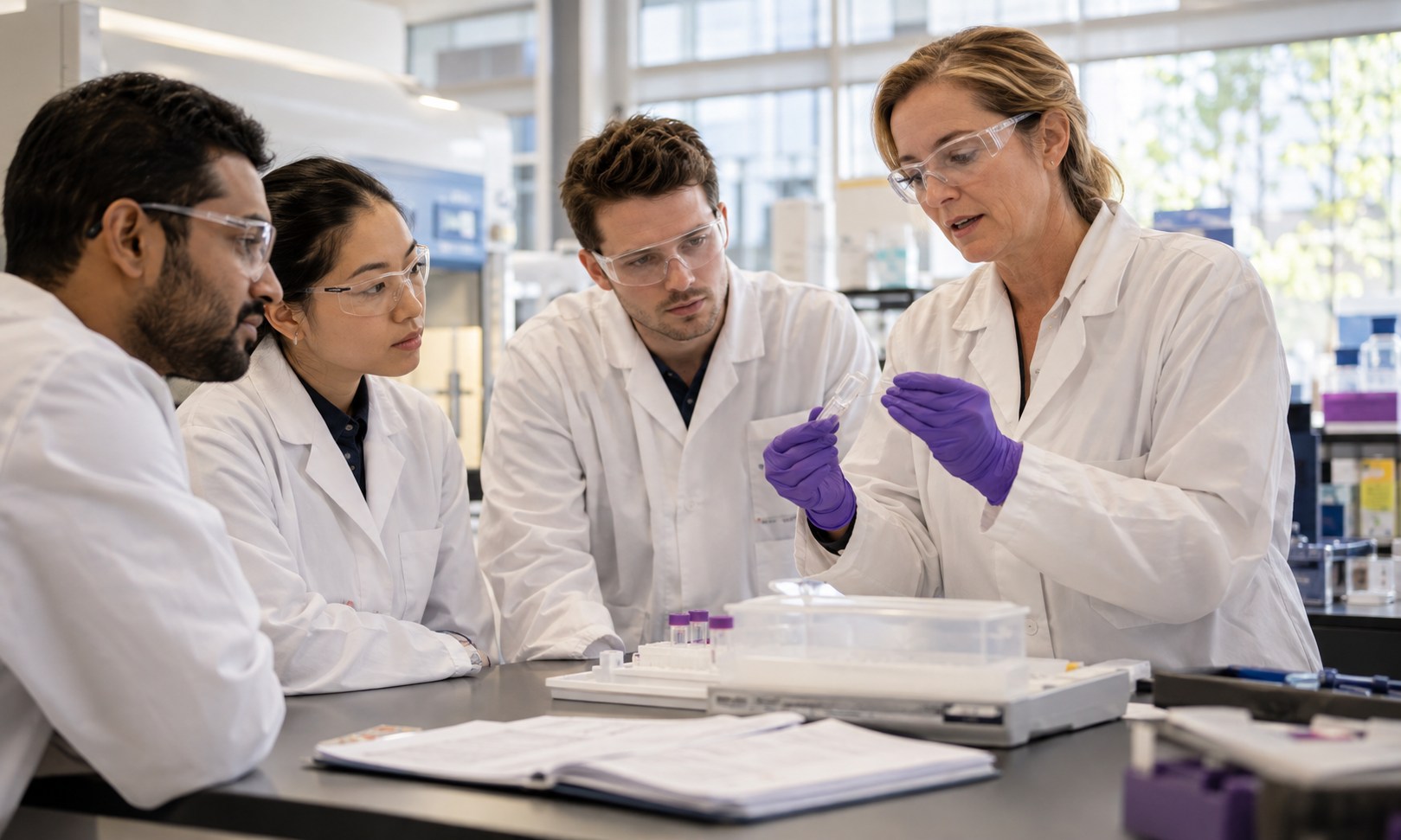
Training builds knowledge. Done properly it's role-specific and built around your own procedures rather than a generic syllabus. Necessary, and on its own not enough.
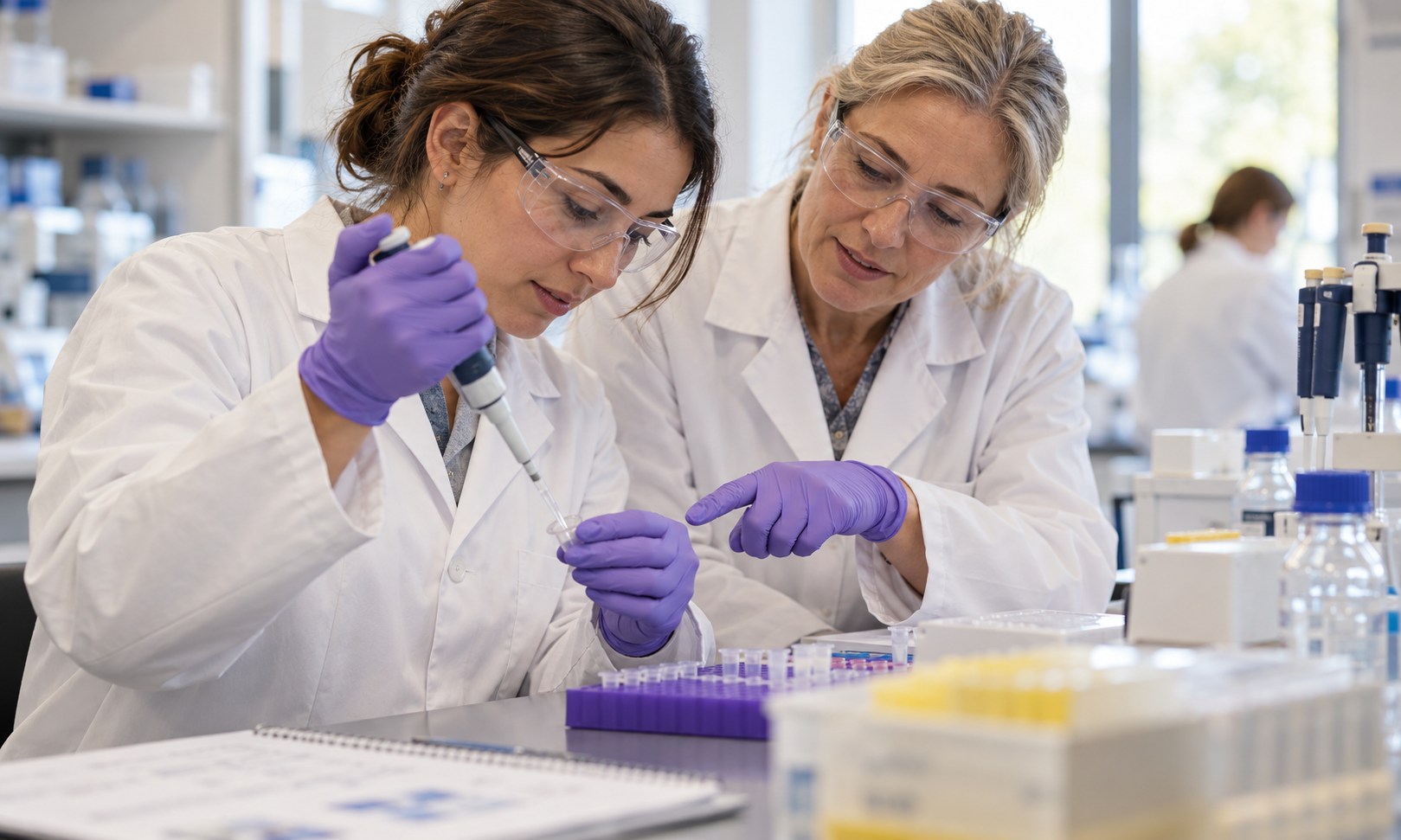
Coaching builds judgement. It happens in the work rather than in a classroom, it includes managers as well as teams, and it carries on after the session finishes.
Every in-house training I deliver includes an hour of reinforcement afterwards, to check what people actually understood and deal with what they were too polite to ask in the room. I also do one-to-one coaching on quality systems and GMP topics.
The reinforcement hour shows whether the team can take what they learned back into their real work, and gives them a chance to brainstorm the challenges they've hit since.
What I can build for you
GxP and quality systems foundations. For people who need to understand the framework they're working inside.
Role-based competency development. Built for what a specific role actually does.
Documentation and data integrity practice. Not the theory of ALCOA, but what good recording looks like at the bench.
Effective internal auditing. For teams running their own audit programme.
Handling unexpected events. What regulators look for during an investigation, and which quality tools apply. Useful for scientific teams meeting regulatory expectations for the first time.
Coaching for quality leaders and managers. Usually the highest-leverage thing on this list.
Recent sessions have covered quality management for early-stage drug development, quality management principles for CROs, deviations management, writing effective SOPs in the age of AI, data governance and data integrity, being audit ready, foundations of quality risk management, and the foundations of digital transformation.
How it gets delivered
Onsite workshops. In your environment, using your procedures and your examples.
Virtual sessions. For distributed teams and multiple sites.
Coaching in the work. Individual, ongoing, in context.
Public industry sessions. Through Life Sciences Australia, for individuals rather than teams.
What you receive
Training materials built around your procedures.
Yours afterwards, not licensed back to you.
A reinforcement session.
An hour after the training to check understanding and pick up what didn't land.
Competency evidence you can show an auditor.
Assessment of understanding, not an attendance register. You still have to demonstrate competence, and I'd rather that evidence meant something.
A record of what was covered and assessed.
Fitting into your existing training matrix without creating extra work.
Where this connects
If the procedure is the problem rather than the people.
Sometimes more training is the wrong answer.
If you need ongoing support rather than a programme.
Mentoring one person inside an ongoing arrangement is different from training a team.
How you'd know it worked
Whether errors that trace back to misunderstanding drop.
Whether competency is being demonstrated rather than recorded.
How long a new starter takes to work unsupervised.
Whether documentation and deviation issues recur.
You'll notice completion rates aren't on that list. You already have those numbers, and they're exactly why the problem stayed invisible.
Proof
Batch release, unblocked — contract development and manufacturing organisation
A CDMO’s final batch review and release had become a bottleneck. Recurring documentation errors, different QA and production priorities, and inconsistent understanding of compliance slowed the process. I assessed the process and brought both teams together to map it, design a batch review procedure, and train staff. The joint approach exposed duplicated steps and practical constraints. Redundant activities were removed, timelines set for each stage, and the project deliverable timeline was met.
Investigating an unexpected result — biotech sponsor
A small biotech had hit a data reproducibility problem. The scientific team was struggling to investigate it, plan the next experiments, and do both in a way that would stand up to regulatory expectations. The project was slipping and investor confidence was going with it.
I ran a tailored training and brainstorming session on handling unexpected events during drug development: the drug approval process, what regulators look for, and the quality tools that apply to an investigation like this one. The session then used those tools on their actual problem to draft an investigation and remediation plan.
The team came away understanding how regulatory expectations applied to their own discovery and development work, and with a draft plan they could act on. Using their own challenge as the worked example is what made the concepts stick.
What clients say.
“Thank you Antiksha Joshi for another very practical and relevant session on the important topic of QMS in life science project management. The Sementis Ltd team participated as a group and followed up with a discussion on what we had learned, what we were already implementing and opportunities for improvement. A great professional development opportunity for those starting out and those more experienced. Thank you for sharing your experience.”
Anne Collins, CEO, Sementis Ltd
“The webinar clarified the elusive concept of quality. Rather than a rigid standard, quality is about meeting the specific needs of our customers and stakeholders. It's not just about ticking boxes; it's about delivering what truly matters.”
Cecile Francis, Director of Strategic Projects, UniQuest
How an engagement runs
1. A conversation.
Thirty minutes to understand the roles, the procedures and where practice has drifted. You'll get an honest view on whether training is the answer or whether the process is the problem.
How an engagement runs
2. Capability review.
I look at your actual procedures and how the work is done. You get a read on the gap between what people know and what they do.
How an engagement runs
3. Programme design.
Content built around your procedures for the roles that need it, using your own situations as the examples. The materials are yours.
How an engagement runs
4. Delivery.
Onsite or virtual, plus competency assessment. I'll need your people off the floor, which is the real cost of this.
How an engagement runs
5. Reinforcement.
The follow-up hour, and coaching where we've agreed it. This is where it either sticks or doesn't.

Who you'd be dealing with
I'm Antiksha Joshi. I've spent 28 years in pharmaceutical and life sciences quality across three continents. I am Chair of Women in Pharma, ISPE Australasia Affiliate.
I also write and speak on quality systems for various knowledge sharing organisations and online publications.
My background is in microbiology. I also hold a diploma in counselling, which on this page is less of a curiosity than it sounds: the hard part of training isn't explaining the requirement, it's working out why someone isn't doing it and what would actually change that.
Questions people ask
Is the training customised to our procedures?
Yes. That's the point of it. Generic GMP training is available from other sources if that's what you require. If you want tailored, practical training, I can help.
Onsite or virtual?
Either. Onsite is better where the work is physical and I want to see the environment. Virtual works well for distributed teams.
How do you measure whether it worked?
Competency assessment rather than attendance, plus the reinforcement session. Beyond that, whether the errors stop.
Do you coach leaders as well as teams?
Yes, and it's often where the most value sits. A manager who can coach changes far more than a team that sat through a session.
Can you train a scientific team with no regulatory background?
Yes, and it's some of the most useful work I do. The trick is using a problem they're actually facing as the example, rather than a generic one.
How often should training be refreshed?
Less often than most matrices demand, and more thoughtfully. Annual refreshers that repeat the same content aren't doing anything.
Can you review our existing training programme?
Yes. Sometimes the answer is that the content is fine and the reinforcement is missing.
How much time do our people need to be off the floor?
It depends on the topic and the roles. I'll be specific about it before you commit, because I know what that costs you.